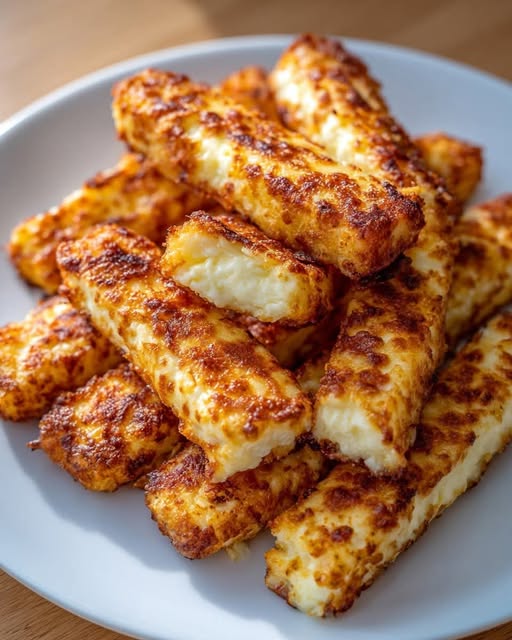
High-Protein Cottage Cheese Sticks
The Complete Extended Guide (Ultra Detailed)
Section 1: Understanding the Recipe Before You Start
Before even touching ingredients, it’s important to understand what you’re trying to achieve.
A perfect cottage cheese stick has three key layers:
- Outer Layer (Crust)
This should be crispy, golden, and slightly crunchy. It protects the inside and adds texture contrast. - Middle Structure (Binding Layer)
This holds everything together. Without this, your sticks will collapse or leak. - Inner Core (Soft Protein Center)
This should be creamy, slightly stretchy, and rich in flavor.
The entire success of this recipe depends on balancing:
- Moisture
- Protein density
- Binding strength
- Cooking temperature
Section 2: Ingredient Deep Dive (Very Detailed)
Cottage Cheese (Main Ingredient)
Not all cottage cheese is equal.
There are three types:
- Low-fat cottage cheese (higher protein, more water)
- Full-fat cottage cheese (creamier, less protein density)
- Dry curd cottage cheese (best for this recipe)
Best choice: Thick, low-moisture cottage cheese
If your cottage cheese is watery:
- It will ruin the structure
- Your sticks will break while frying or baking
Advanced tip:
Blend cottage cheese slightly if you want a smoother texture, but do not over-blend or it becomes too liquid.
Protein Powder
This is what makes the recipe “high-protein”.
Best options:
- Unflavored whey protein
- Casein protein (better binding)
- Plant protein (pea protein works well but slightly dense)
Important:
Too much protein powder makes sticks:
- Dry
- Chalky
- Hard
Correct balance is critical.
Cheese Combination (Structure + Flavor)
Mozzarella:
- Adds stretch
- Helps bind
Parmesan:
- Adds saltiness
- Helps crisp outer texture
Optional additions:
- Cheddar (strong flavor)
- Processed cheese (extra meltiness)
Flour Choices
Flour stabilizes everything.
Options:
- Oat flour (healthier, slightly soft texture)
- All-purpose flour (best structure)
- Almond flour (low carb but fragile)
Eggs
Eggs act as:
- Binder
- Moisture balancer
- Protein booster
Egg whites can be used for higher protein and lower fat.
Section 3: Moisture Control (Most Important Part)
This is where most people fail.
Cottage cheese contains water trapped inside curds.
If not removed:
- Mixture becomes sticky and unstable
- Sticks fall apart during cooking
Advanced Draining Method
- Place cottage cheese in cloth
- Tie tightly
- Put weight on top (like a heavy bowl)
- Leave for 30–60 minutes
You’ll notice liquid draining out slowly.
Goal:
- Thick, almost paste-like cheese
Section 4: Mixing Process (Detailed Mechanics)
When mixing:
First combine:
- Cottage cheese
- Mozzarella
- Parmesan
Mix until evenly distributed.
Then add:
- Eggs slowly while mixing
Then dry ingredients:
- Flour
- Protein powder
Mix gradually, not all at once.
Why?
- Prevents lumps
- Maintains even texture
Section 5: Dough Texture Science
Perfect dough should be:
- Soft but not sticky
- Firm enough to shape
- Not crumbly
Fixing Problems
If too wet:
- Add flour or protein powder
If too dry:
- Add yogurt or a little milk
If too sticky:
- Chill longer
Section 6: Shaping Techniques (Advanced)
There are multiple shaping methods:
Hand Rolling
- Classic method
- Slightly uneven but natural
Mold Shaping
- Use silicone molds
- Perfect uniform sticks
Piping Method
- Put mixture in piping bag
- Pipe stick shapes onto tray
Section 7: Pre-Freezing Strategy
Freezing is not optional for best results.
Why freeze:
- Solidifies structure
- Prevents melting too early
- Helps coating stick properly
Time:
- 20 minutes freezer OR
- 45 minutes refrigerator
Section 8: Coating Science
The coating has layers:
- Flour layer (dry base)
- Egg wash (adhesive layer)
- Breadcrumb layer (crunch)
Double Coating Method
Repeat egg + breadcrumbs twice.
Result:
- Extra crispy crust
- Stronger shell
- Less breakage
Section 9: Cooking Method Comparison (Very Detailed)
Air Frying
Pros:
- Less oil
- Healthier
- Easy cleanup
Cons:
- Slightly less crispy than deep fry
Perfect for:
- Fitness-focused version
Baking
Pros:
- No frying required
- Good for batch cooking
Cons:
- Takes longer
- Less crunch
Deep Frying
Pros:
- Best texture
- Crispiest result
Cons:
- High calories
- Needs careful temperature control
Section 10: Oil Temperature Science (For Frying)
Oil too hot:
- Outside burns
- Inside remains cold
Oil too cold:
- Sticks absorb oil
- Become soggy
Perfect range:
- Medium heat (around 170–180°C)
Section 11: Texture Perfection Guide
Perfect stick should:
Outside:
- Golden brown
- Crispy sound when tapped
Inside:
- Soft
- Slightly stretchy
- Not watery
Section 12: Flavor Variations (Extended)
You can create multiple versions:
Spicy Version
- Add chili powder
- Add green chilies
Italian Style
- Add basil
- Add oregano
- Add garlic
Desi Style
- Add garam masala
- Add coriander powder
- Add cumin
High Protein Extreme Version
- Add shredded chicken
- Add tuna
Section 13: Dips and Pairings
These sticks taste better with dips:
- Garlic yogurt sauce
- Mint chutney
- Spicy mayo
- Cheese sauce
Section 14: Storage System
Refrigeration
- Store cooked sticks up to 3 days
Freezing
- Freeze uncooked sticks
- Cook directly from frozen
Section 15: Reheating Techniques
Best method:
- Air fryer
Avoid:
- Microwave (kills crispiness)
Section 16: Common Mistakes (Expanded)
- Not draining cottage cheese
- Using too much protein powder
- Skipping chilling
- Overcooking
- Poor coating
Section 17: Nutrition Breakdown (Approximate)
Per serving:
- High protein
- Moderate fat
- Low carbs (depending on flour)
Section 18: Scaling the Recipe
For large batches:
- Keep ratios consistent
- Chill in batches
- Cook in stages
Section 19: Turning This Into a Business Idea
Since you’re into online earning, this recipe can be used for:
- Food blog (AdSense income)
- Instagram reels
- TikTok viral recipes
- Affiliate kitchen tools
Section 20: Final Master Tips
- Always control moisture
- Always chill before cooking
- Always balance protein and flour
- Always cook at correct temperature
Leave a Reply