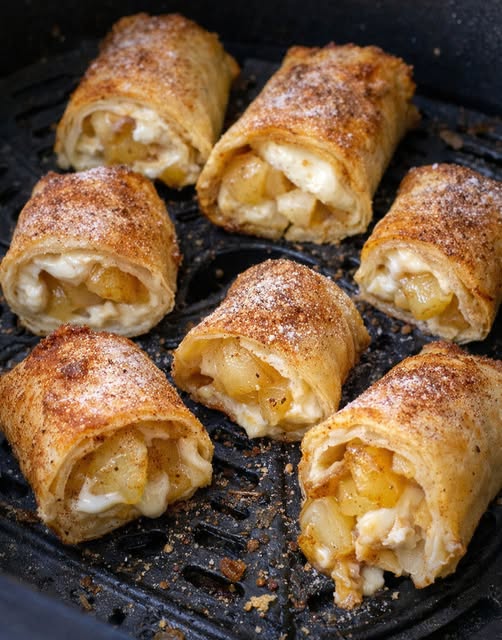
Apple Pie Roll Ups – Ultra Deep Recipe
Introduction & Background
The Apple Pie Roll Ups are a modern reinterpretation of one of the most iconic desserts in culinary history: the traditional apple pie. Apple pie itself is deeply rooted in European baking culture, with early versions appearing in England and later becoming a defining dessert in American cuisine. Classic apple pie was never just food—it was a symbol of comfort baking, seasonal fruit preservation, and family-style dessert tradition.
Traditional apple pie relies on a full pastry structure: a bottom crust, a slow-cooked spiced apple filling, and a top crust baked in an oven for long periods. While rich and flavorful, it is also time-consuming, requires precise dough handling, and produces large portions that are not always convenient for modern snacking lifestyles.
The Apple Pie Roll Ups solve that problem by breaking the entire dessert down into a portable, crispy, controlled bite system.
Instead of a full pie structure, this version converts apple pie into:
- A concentrated spiced apple filling
- A thin structural wrapper (tortilla / pastry / spring roll sheet)
- A sealed roll format
- A high-heat crisping process
The result is a dessert that preserves the soul of apple pie but delivers it in a faster, crispier, more snackable form.
It is designed for:
- Air fryer cooking
- Quick desserts
- Tea-time snacks
- Party finger foods
- Modern minimal baking systems
Chef’s Philosophy & Dessert Engineering System
This recipe is not just about rolling apples in dough—it is about building a controlled heat, moisture, and texture transformation system.
Every component is engineered with purpose:
- Apples → flavor + moisture core
- Spices → aromatic layering system
- Sugar/caramel → binding + browning system
- Wrapper → structural crisp shell
- Heat → final transformation trigger
1. Apple Transformation Engineering (Fruit to Filling System)
Raw apples are structurally firm and high in water content. If used directly, they would release moisture and destroy crispness.
So the apples must undergo a transformation process:
- Heat softening
- Sugar caramelization
- Moisture reduction
- Flavor concentration
This converts raw fruit into a thick, jam-like apple pie core system.
The goal is not just “soft apples”—it is controlled fruit breakdown with syrup stabilization.
2. Spice Layer Complexity System
Apple pie flavor is not created by apples alone. It is built through aromatic layering.
Core spice architecture includes:
- Cinnamon → warm sweetness illusion + bakery identity
- Nutmeg → deep background aroma + complexity
- Vanilla → soft dessert rounding effect
- Lemon juice → acidity balance + freshness lift
- Optional cloves → deep autumn spice profile
These spices work together to create a multi-dimensional aroma cloud, not just sweetness.
3. Crisp Shell Engineering System
The outer layer is responsible for structure, crunch, and final texture contrast.
It must:
- Hold filling securely
- Resist moisture from apple filling
- Crisp under high heat
- Develop golden color via caramelization
This is achieved using:
- Thin wrappers (spring roll sheets / tortillas / puff pastry)
- Fat coating (butter or oil)
- High heat air circulation
4. Moisture Control System (Critical Engineering Layer)
This is the most important technical challenge.
Apple filling naturally releases steam during cooking. If not controlled:
- Roll becomes soggy
- Wrapper breaks
- Crisp fails
So moisture must be controlled at three stages:
- Cooking reduction stage (thick filling creation)
- Cooling stage (steam release before wrapping)
- High heat sealing stage (final dehydration crisping)
5. Texture Contrast Design System
A perfect Apple Pie Roll Up must create contrast in every bite:
- Crisp outer shell
- Soft warm apple center
- Slight caramel stickiness
- Aromatic spice burst
This contrast is what creates the “apple pie experience” in a portable format.
Difficulty, Timing & Yield
Difficulty Level: Medium
Preparation Time: 25–30 minutes
Cooking Time: 12–15 minutes
Total Time: ~45 minutes
Yield: 8–10 roll ups
Ingredients (Fully Expanded Structural Breakdown)
Apple Filling Core System
- 3 medium apples (peeled, finely diced)
Function: fruit structure base + natural sweetness - 3 tablespoons brown sugar or sweetener
Function: caramelization + syrup formation - 1 teaspoon cinnamon
Function: signature apple pie aroma - 1/2 teaspoon nutmeg
Function: depth and bakery complexity - 1 teaspoon lemon juice
Function: flavor balance + oxidation control - 1–2 teaspoons butter
Function: richness + caramel base formation - Optional pinch of cloves
Function: strong spice depth enhancement
Structural Wrapper System
Choose one:
- Spring roll sheets → ultra crisp thin shell
- Tortillas → soft-crisp hybrid structure
- Puff pastry strips → rich bakery-style roll ups
Function:
- Encases filling
- Controls shape
- Forms outer crisp structure
Sealing & Binding System
- Flour-water paste OR egg wash
Function:
- Prevents leakage
- Locks structure during frying
- Ensures clean roll edges
Crisp Enhancement System
- Melted butter or oil brushing
- Optional cinnamon sugar coating
Function:
- Browning acceleration
- Caramel crust formation
- Flavor enhancement
Optional Serving Enhancers
- Vanilla ice cream
- Caramel drizzle
- Powdered sugar dusting
- Whipped cream
- Crushed nuts (walnut/almond)
Step-by-Step Method (Advanced Culinary Engineering Process)
Step 1: Apple Filling Transformation Phase
Heat pan on medium flame.
Add:
- Butter
- Apples
- Brown sugar
- Cinnamon
- Nutmeg
- Lemon juice
Cook for 8–12 minutes.
During cooking:
- Apples soften gradually
- Sugar melts into syrup
- Spices infuse deeply
- Liquid reduces into thick glaze
Final target texture:
👉 Thick, jam-like apple filling (NOT watery)
This step is crucial because it defines final crisp quality.
Step 2: Moisture Stabilization Cooling Phase
Transfer filling to a bowl.
Let it cool completely.
Why this matters:
- Stops steam from damaging wrappers
- Prevents soggy rolls
- Improves sealing strength
- Enhances flavor concentration
Cooling is not optional—it is structural engineering.
Step 3: Wrapper Setup Phase
Lay wrappers flat on dry surface.
Ensure:
- No moisture on edges
- Clean working surface
- Even thickness distribution
This ensures smooth rolling and sealing.
Step 4: Rolling & Structural Formation Phase
Place apple filling near one edge.
Roll tightly but not overly compressed.
Seal edges using:
- Egg wash OR flour paste
This creates a sealed internal flavor capsule system.
Avoid overfilling—this is the most common structural failure point.
Step 5: Surface Crisp Preparation Phase
Brush outer layer with:
- Melted butter or oil
Optional:
- Sprinkle cinnamon sugar for caramel crust
This enhances:
- Browning
- Flavor depth
- Crunch formation
Step 6: Air Frying / Baking Transformation Phase
Cook at:
- Air fryer: 180°C for 10–12 minutes
OR - Oven: 190°C for 12–15 minutes
During cooking:
- Wrapper dehydrates and crisps
- Sugar caramelizes on surface
- Apple filling warms and softens again
- Aromas intensify dramatically
This is the final transformation phase.
Step 7: Crisp Stabilization Phase
After cooking:
Let rest 2–3 minutes.
This allows:
- Steam to settle
- Crisp shell to lock
- Internal temperature to stabilize
Advanced Chef Tips (Professional Optimization)
- Always reduce apple filling until thick
- Never wrap hot filling
- Use spring roll wrappers for maximum crispiness
- Brush butter for bakery-level golden finish
- Do not overcrowd air fryer
- Serve immediately for best crunch
Common Mistakes & Failure Analysis
1. Soggy Roll Ups
Cause:
- Wet filling or insufficient cooking reduction
Fix:
- Cook apples longer until thick
2. Burst Rolls
Cause:
- Overfilling or loose rolling
Fix:
- Use smaller filling portions and tight sealing
3. Weak Crisp Texture
Cause:
- No fat coating or low temperature
Fix:
- Brush butter and increase heat slightly
4. Burnt Edges
Cause:
- Excess sugar on surface or too high heat
Fix:
- Reduce sugar coating and lower temperature
Storage & Reheating System
- Best eaten fresh
- Refrigerate: up to 2 days
- Reheat: air fryer 3–5 minutes
- Avoid microwave (destroys crisp structure)
Serving Variations
Apple Pie Roll Ups can be served in multiple upgraded formats:
- Dessert mode: ice cream + caramel drizzle
- Snack mode: powdered sugar dusting
- Gourmet mode: nuts + vanilla glaze
- Café style: whipped cream + cinnamon dust
- Festival style: chocolate drizzle + crushed biscuits
Final Thoughts
The Apple Pie Roll Ups are a complete re-engineering of a traditional dessert into a modern crisp delivery system.
They combine:
- Classic apple pie flavor identity
- Fast cooking technology
- Crisp structural engineering
- Controlled moisture transformation
- Portable dessert convenience
When executed properly, they deliver:
- Golden crispy shell
- Soft caramel apple filling
- Warm spice aroma burst
- Balanced sweetness
- Instant comfort dessert satisfaction
It is not just a recipe—it is a modern dessert transformation system built on texture science, heat control, and flavor concentration engineering.
Leave a Reply