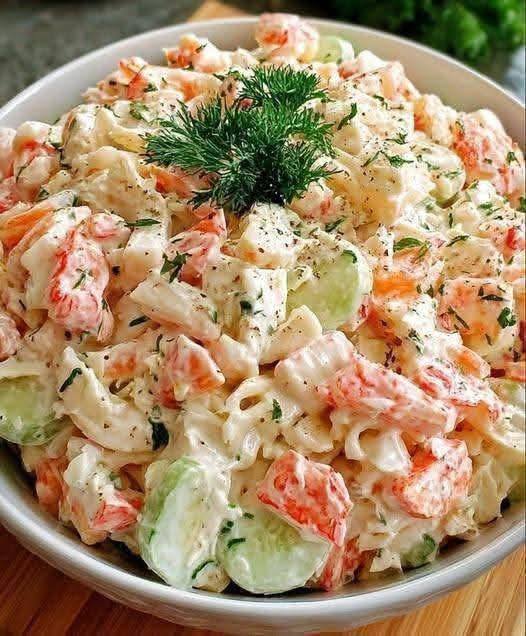
Classic Creamy Olivier Salad – The Ultimate Deep-Dive Culinary Masterclass
Introduction & Background
Classic Creamy Olivier Salad is one of the most iconic cold salads in European culinary history, known for its rich, creamy texture and finely balanced mix of vegetables, eggs, and protein. At first glance, it looks like a simple potato salad-style dish, but in reality, it carries a deep cultural and historical legacy that spans over a century.
The original version of Olivier Salad was created in the 1860s by Lucien Olivier, a Belgian-French chef working in Moscow at the famous Hermitage restaurant. His original recipe was considered a luxury dish, made with ingredients like game meat, caviar, and a secret proprietary sauce. It was so famous that diners came specifically to the restaurant just to experience it.
Over time, especially during the Soviet era, the recipe evolved into a more accessible version using everyday ingredients. This transformation gave birth to what is now commonly known as “Russian Salad” or “Olivier Salad,” which became a staple in households across Eastern Europe and Central Asia.
The modern version is typically made with boiled potatoes, carrots, peas, eggs, pickles, and either chicken, ham, or sausage, all bound together with a creamy mayonnaise-based dressing. It is served cold and is often prepared for celebrations, holidays, and family gatherings.
What makes Olivier Salad special is not just its ingredients, but its texture and harmony. Every bite contains a combination of soft potatoes, slightly firm carrots, creamy eggs, crunchy pickles, and sweet peas, all unified by a rich, tangy dressing.
Chef’s Philosophy & What Makes This Version Exceptional
To truly master Olivier Salad, you need to understand that it is not just a mix of ingredients—it is a structured layering of textures and flavors.
The philosophy behind this version is based on balance, precision cutting, and controlled creaminess.
1. Texture Harmony
Every ingredient in Olivier Salad has a different texture. Potatoes are soft and starchy, carrots are slightly firm, pickles add crunch, eggs bring creaminess, and peas add pop and sweetness.
The goal is not to let one texture dominate but to ensure every bite contains a balanced combination of all elements.
2. Uniform Cutting Discipline
One of the most important secrets in Olivier Salad is consistent dicing. If ingredients are cut unevenly, the salad loses its refined texture and becomes chaotic.
Uniform cubes ensure that every spoonful delivers the same experience.
3. Controlled Creaminess
Mayonnaise is the binding element, but too much can overwhelm the salad and turn it heavy or greasy. Too little makes it dry and disconnected.
The ideal Olivier Salad should be creamy but not dripping, rich but not heavy.
4. Flavor Layering
Although the ingredients are simple, flavor development happens in layers: salty (ham or chicken), tangy (pickles), sweet (peas and carrots), and rich (eggs and mayo). When balanced correctly, the salad becomes more than the sum of its parts.
Difficulty, Timing & Yield
- Difficulty Level: Easy
- Preparation Time: 20–25 minutes
- Cooking Time: 20–30 minutes (boiling ingredients)
- Cooling Time: 30 minutes
- Total Time: 1.5 to 2 hours
- Servings: 4–6 portions
Ingredients
Main Base Ingredients
- 3 medium potatoes (boiled and peeled)
- 2 medium carrots (boiled and peeled)
- 1 cup green peas (boiled or canned)
- 4 large eggs (boiled)
- 1 cup cooked chicken, ham, or sausage (finely diced)
- 3–4 small pickles (diced)
Dressing
- 1/2 to 3/4 cup mayonnaise (adjust to preference)
- 1 teaspoon mustard (optional for tang)
- Salt to taste
- Black pepper to taste
Optional Enhancers
- Fresh dill or parsley
- A small splash of lemon juice or vinegar
- A pinch of sugar for balance
Step-by-Step Instructions
Step 1: Boiling the Vegetables
Start by boiling potatoes and carrots in separate pots or together if preferred.
Cook until just tender but not mushy. Overcooking will ruin texture integrity.
Once cooked, allow them to cool completely before cutting. Warm vegetables will become mushy when mixed.
Step 2: Preparing the Eggs
Boil eggs until fully hard (about 9–10 minutes).
Cool them in cold water, then peel carefully.
This prevents yolk crumbling and ensures clean cutting.
Step 3: Ingredient Dicing (Critical Step)
This is one of the most important steps in Olivier Salad preparation.
Cut potatoes, carrots, eggs, pickles, and meat into small, even cubes (approximately 0.5 cm).
Consistency is key. Uniform size ensures balanced texture in every bite.
Take your time here—this step defines the quality of the final salad.
Step 4: Preparing the Mixing Bowl
Use a large mixing bowl to ensure enough space for gentle mixing.
Add all diced ingredients: potatoes, carrots, eggs, pickles, peas, and meat.
Do not add mayonnaise yet.
Step 5: Initial Mixing
Gently toss all ingredients together using a spoon or spatula.
This ensures even distribution before adding dressing.
Avoid aggressive mixing to prevent breaking soft ingredients.
Step 6: Adding the Dressing
Add mayonnaise gradually.
Start with a smaller amount and increase as needed.
Mix gently until everything is lightly coated.
The salad should look creamy but not overly wet.
Add salt, pepper, and optional mustard at this stage.
Step 7: Flavor Adjustment
Taste and adjust seasoning.
If it feels too heavy, add a small splash of lemon juice.
If it feels flat, add a pinch of salt or mustard for depth.
Step 8: Chilling the Salad
Cover and refrigerate for at least 30 minutes.
This step allows flavors to blend and improves texture.
Olivier Salad always tastes better after resting.
Serving Suggestions
Classic Creamy Olivier Salad can be served as:
- A holiday side dish
- A cold appetizer
- A sandwich filling
- A party salad bowl
- A breakfast or brunch side
It pairs well with grilled meats, bread, or rice dishes.
Pro Tips for Perfect Results
- Always cool ingredients before mixing
- Keep dice size consistent
- Add mayo gradually, not all at once
- Chill before serving for best flavor
- Use firm pickles for crunch
Common Mistakes to Avoid
- Overcooking potatoes or carrots
- Uneven chopping sizes
- Adding too much mayonnaise
- Mixing while ingredients are warm
- Skipping chilling time
Variations You Can Try
- Chicken Olivier Salad (lighter version)
- Sausage-based Russian Salad
- Vegetarian version (no meat)
- Yogurt-mayo hybrid dressing (healthier)
- Spicy version with mustard and chili flakes
Understanding the Science Behind Olivier Salad
Olivier Salad works through texture contrast and emulsification.
Mayonnaise acts as an emulsion, binding oil and water-based ingredients into a stable creamy coating.
Starch from potatoes helps slightly thicken the mixture and absorb flavor.
Cooling the salad enhances flavor integration as fats and seasonings settle and distribute evenly.
Storage & Shelf Life
Store in an airtight container in the refrigerator for up to 2–3 days.
Do not freeze, as mayonnaise and potatoes will break down.
Final Thoughts
Classic Creamy Olivier Salad is more than just a cold salad—it is a historic dish that represents comfort, celebration, and culinary evolution.
When made correctly, it delivers a perfect harmony of creamy, crunchy, soft, and savory textures in every bite.
It is simple in ingredients but deeply refined in execution.
Leave a Reply