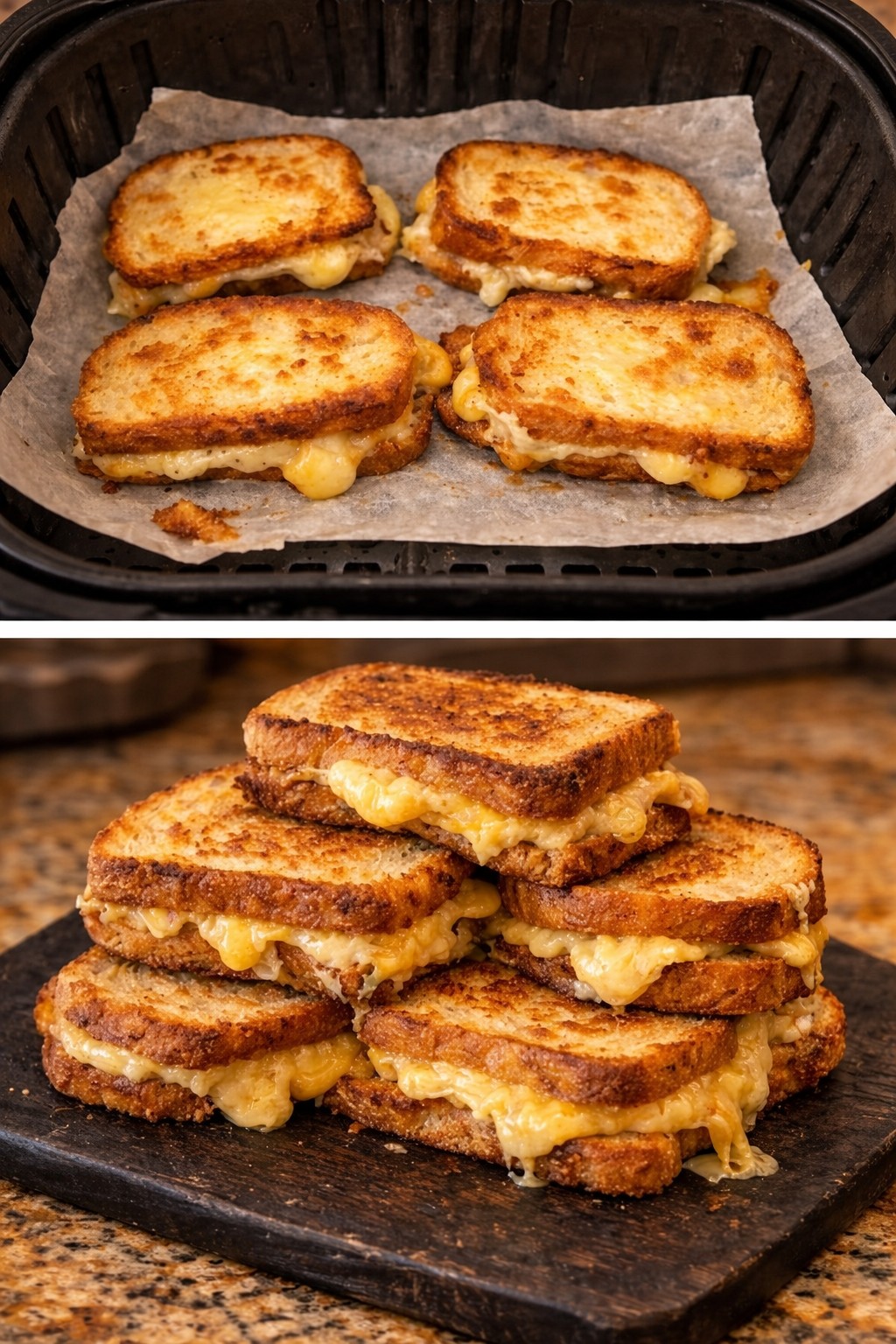
Air Fryer Egg Toast – The Ultimate Crispy Breakfast Recipe
Introduction & Background
Air Fryer Egg Toast is one of the simplest-looking breakfast recipes in modern home cooking, but when you study it closely, it becomes a surprisingly technical and rewarding dish. At its core, it combines two of the most universal foods in human history: bread and eggs. These two ingredients have existed in almost every culinary culture across the world and are often used as the foundation for quick meals, comfort food, and protein-rich breakfasts.
Bread itself dates back thousands of years to early human civilizations. Ancient Egyptians are often credited with refining leavened bread, while flatbreads existed even earlier in Mesopotamia. Bread became a symbol of sustenance because it was cheap, filling, and adaptable. Over time, it evolved into hundreds of variations—soft sandwich bread, crusty artisan loaves, enriched brioche, and whole grain health breads.
Eggs are equally significant in global cuisine. They are one of the most complete natural sources of protein, containing essential amino acids, healthy fats, vitamins, and minerals. Across cultures, eggs are used in breakfast dishes, baked goods, sauces, and savory meals. What makes eggs especially unique is their ability to transform under heat—from liquid to soft custard to firm structure depending on temperature control.
When these two ingredients come together, they create a perfect balance: bread provides structure and carbohydrates, while eggs provide protein, richness, and softness. Traditionally, egg toast is made in a pan with butter or oil, where bread is dipped into beaten eggs and fried until golden. This method produces a rich, slightly greasy, crispy result that is extremely satisfying but not always the healthiest or cleanest method.
The air fryer changes everything.
The air fryer uses rapid hot air circulation to mimic frying with significantly less oil. This allows you to achieve crisp textures while maintaining a lighter nutritional profile. It also reduces cooking mess, improves consistency, and shortens cooking time.
Air Fryer Egg Toast is essentially a modern upgrade of a traditional comfort food. It preserves everything people love about egg toast—crispy edges, soft egg center, warm bread—but makes it faster, cleaner, and more customizable.
What makes this dish especially interesting is its flexibility. It can be soft and custardy like a baked egg dish or firm and crispy like a breakfast sandwich base. It can be made plain or loaded with cheese, vegetables, sauces, or even meat. This adaptability is what has made it popular in social media food culture, especially among quick breakfast recipes.
Chef’s Philosophy & What Makes This Version Exceptional
To truly master Air Fryer Egg Toast, you need to understand that it is not just a recipe—it is a controlled heat-and-texture experiment.
The philosophy behind this version is built on three core culinary principles: structure control, heat precision, and moisture balance.
1. Structure Control (Bread as a Frame)
In this dish, bread is not just an ingredient—it is a structural mold. It holds the egg in place and defines the shape of the final dish. If the bread is too thin or too soft, it collapses under moisture. If it is too thick, the egg may not cook evenly.
This is why selecting the right bread matters. Medium-thick slices with moderate density work best because they can absorb some moisture while still maintaining structure.
2. Heat Precision (Egg as a Sensitive Protein System)
Eggs are extremely sensitive to heat. Their proteins begin to coagulate at relatively low temperatures. If heat is too aggressive, the egg becomes rubbery and dry. If heat is too low, it remains undercooked.
The air fryer provides a controlled environment, but timing is still critical. The goal is to gently set the egg while allowing the bread to crisp at the same time.
3. Moisture Balance (Preventing Soggy Bread)
One of the biggest challenges in egg toast is sogginess. Eggs contain water, and when poured onto bread, they naturally soak into it. If not managed properly, the bread becomes soft instead of crisp.
The solution is controlled egg quantity, proper bread thickness, and correct cooking temperature. The bread should absorb just enough egg to become flavorful but not collapse.
4. Flavor Layering (Simple but Strategic Seasoning)
Even though the dish is simple, seasoning plays a major role. Salt enhances egg flavor, pepper adds depth, and optional spices like paprika or garlic powder create complexity.
Cheese or vegetables can be added strategically to introduce richness or freshness, but they must be balanced so they don’t overpower the base structure.
Difficulty, Timing & Yield
- Difficulty Level: Easy
- Preparation Time: 8–12 minutes
- Cooking Time: 10–14 minutes
- Total Time: 20–25 minutes
- Servings: 1–2 portions
Ingredients
For the Base
- 2 slices of bread (sandwich bread, brown bread, or sourdough)
- 2 large eggs
- 1–2 tablespoons milk (optional for softer texture)
- Salt to taste
- Black pepper to taste
For Cooking Enhancement
- 1 teaspoon butter or oil (optional)
- 1/2 teaspoon garlic powder (optional)
- 1/2 teaspoon paprika (optional)
Optional Add-Ins
- Grated cheese (cheddar, mozzarella, or processed slices)
- Chopped onions or capsicum
- Chili flakes
- Fresh coriander or parsley
Step-by-Step Instructions
Step 1: Preparing the Egg Mixture
Crack the eggs into a bowl and whisk thoroughly until the yolks and whites are fully combined.
Add a small amount of milk if you prefer a softer, creamier texture.
Season with salt and black pepper. Mix again until fully uniform.
This step ensures that every bite of toast has consistent flavor and texture.
Step 2: Preparing the Bread Structure
Take your bread slices and gently press the center using a spoon or your fingers.
This creates a shallow “well” that helps contain the egg mixture.
If you want extra crisp edges, lightly brush the surface with butter or oil.
This step improves both texture and flavor development during air frying.
Step 3: Assembling the Egg Toast
Place bread slices into the air fryer basket lined with parchment paper if needed.
Carefully pour the egg mixture into the center of each slice.
Do not overfill. The egg should sit within the bread boundaries.
If using cheese or vegetables, add them on top of the egg mixture at this stage.
Step 4: Preheating the Air Fryer
Preheat the air fryer to 180°C (350°F) for 3–5 minutes.
Preheating ensures that cooking begins immediately, which helps set the egg structure faster and prevents sogginess.
Step 5: Air Frying Process
Place the prepared toast into the air fryer.
Cook for 10–14 minutes depending on thickness and desired texture.
During cooking:
- The egg slowly solidifies
- Bread edges become golden
- Surface becomes slightly crisp
Avoid opening the air fryer too frequently, as temperature drops can affect egg setting.
Step 6: Final Crisp Adjustment
If you want a crunchier texture, increase temperature slightly for the last 1–2 minutes.
This enhances browning on the bread without overcooking the egg.
Step 7: Resting Stage
Remove the egg toast and let it rest for 1–2 minutes.
This allows the egg to stabilize and prevents it from breaking apart when cut.
Serving Suggestions
Air Fryer Egg Toast can be served in many ways:
- With ketchup or chili sauce
- With garlic mayo or cheese sauce
- With hot tea or coffee
- With fruit for a balanced breakfast
- As a quick protein snack anytime
Pro Tips for Perfect Egg Toast
- Use medium-thick bread for best structure
- Do not overfill with egg mixture
- Always preheat air fryer
- Add cheese midway for better melt
- Press bread center for egg containment
Common Mistakes to Avoid
- Using very thin bread that becomes soggy
- Overpouring egg mixture
- Skipping seasoning in eggs
- Not preheating air fryer
- Overcooking until egg becomes rubbery
Creative Variations
- Cheese-loaded egg toast
- Spicy masala egg toast
- Vegetable egg toast
- Chicken or tuna egg toast
- Creamy custard-style egg toast
Scientific Explanation (Why It Works)
Egg proteins begin to coagulate as heat increases, forming a solid structure. This creates the “set” texture inside the toast.
Meanwhile, bread undergoes the Maillard reaction, where sugars and amino acids react under heat to create browning, crispness, and flavor depth.
The air fryer accelerates both processes through rapid, even heat circulation.
The combination creates a dual-texture dish: crisp exterior with soft, rich interior.
Storage & Reheating
Best eaten fresh.
Store for up to 1 day in refrigerator.
Reheat in air fryer at 160–170°C for 2–3 minutes.
Avoid microwave reheating for best texture.
Final Thoughts
Air Fryer Egg Toast proves that even the simplest ingredients can become something deeply satisfying when handled correctly.
It is fast, customizable, filling, and perfect for everyday use.
When done properly, it delivers the ideal contrast of crispy bread and soft, flavorful egg—making it a reliable go-to breakfast in any kitchen.
Leave a Reply